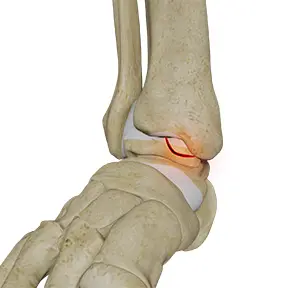




The talus is the keystone of the ankle — the bone that links the foot to the leg and carries your whole body weight through the joint. In a talar extrusion, a high-energy injury (typically a serious car accident or a fall from height), that bone is forced partly or completely out of the foot, through the skin. It is as serious as it sounds, with real risks of infection, loss of the bone’s blood supply, and later arthritis.
Remove it, or put it back?
Historically, surgeons often removed the extruded bone and fused the joint. More recently the approach has shifted towards cleaning the bone and reimplanting it — putting the patient’s own talus back where it belongs. The open question was how patients actually fare in the medium term: pain, walking, and getting back to normal life.
What we found
Across twelve patients, all twelve had successful reimplantation of the talus. Outcomes depended on the injury pattern: patients with partial extrusions and associated fractures tended to do better — in walking, pain and social-life scores — than those whose ligaments had failed completely and the bone had come out cleanly.
What this means for patients
The headline is hopeful: an injury that once meant fusing or even losing the joint can often be reconstructed using your own bone, with meaningful function in the years that follow. It is demanding surgery and the result depends heavily on the exact injury — but “the bone came out” is no longer the end of the story it once was.
Source: Jha S, Atkinson K, McFegan MR, Patel A, Vris A, Heidari N, Parker L, Jeyaseelan LA, Malagelada F. Assessment of Midterm Functional Outcomes Following Talar Extrusion Injuries. Foot & Ankle Orthopaedics. Read the full paper →