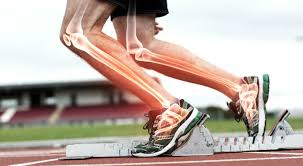
The pattern of injury varies with the sport — runners get stress fractures and Achilles trouble, footballers get ligament injuries and ankle sprains, climbers get talar dome lesions, dancers get posterior impingement.
Sporting injuries are common and generally occur as the result of accidents or collisions, failing to warm up or stretch sufficiently. Not using protective equipment, using it incorrectly or a lack of proper training can also cause injury. For a keen sports person, an injury can be both painful and frustrating, sometimes leading to a protracted period of enforced rest and a loss of fitness and condition. Among the most common sporting injuries that affect the foot and ankle are:
In the foot and ankle, the commonest sporting injuries are ligament sprains, tendon strains and tears, stress fractures from repetitive overload, and cartilage (osteochondral) injuries inside the joint. Many settle with rest, rehabilitation and a graded return to sport; others — a high ankle sprain, an Achilles rupture, an unstable fracture — need more structured treatment to avoid lasting problems.
The priority is an accurate diagnosis early, because the injuries that look minor are sometimes the ones that cause trouble if missed. Assessment combines a careful examination with imaging where needed — X-ray, ultrasound or MRI — to establish exactly what is injured and how badly.
Treatment is then matched to the injury and to the demands of your sport. For most athletes the aim is not simply to heal the tissue but to restore confidence, strength and proprioception so the injury does not recur, with a return-to-play plan built around your goals.