Bunion Surgery (including Tailor’s Bunion)
All Treatments
Forefoot · Hallux Valgus

Bunion Surgery (including Tailor’s Bunion)

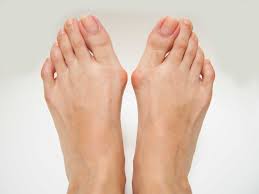
Modern keyhole bunion correction restores big-toe alignment with smaller scars and faster recovery than traditional open surgery — when the deformity is suitable. Tailor’s bunion (the 5th toe equivalent) is corrected with the same family of techniques.

AnaestheticRegional + sedation
StayDay case

Royal College British Orthopaedic AO Trauma Churchill Limb Recon Specialist Reg.
27
Years of practice
94
Publications
3
Sub-specialty areas
3
Central London clinics

Forefoot · Hallux Valgus

Bunion Surgery (including Tailor’s Bunion)

Modern keyhole bunion correction restores big-toe alignment with smaller scars and faster recovery than traditional open surgery — when the deformity is suitable. Tailor’s bunion (the 5th toe equivalent) is corrected with the same family of techniques.

A bunion is the bony bump on the inside of the big-toe joint, but the real problem sits in the alignment of the bone behind it (the first metatarsal). We correct it by precisely cutting the bone (an osteotomy) and shifting it back into a corrected position, then holding it there with small screws while it heals. Modern minimally invasive (keyhole) bunion correction performs this through three or four small skin incisions, leaving smaller scars and typically allowing a faster return to normal shoes. Traditional open scarf or chevron osteotomy remains the right operation for moderate-to-severe deformities or for cases where the alignment problem is more complex — both work very well, and choice of technique is matched to the specific deformity on weight-bearing X-rays. Tailor’s bunion is the same problem at the 5th toe joint and is fixed in the same family of ways. Where the deformity comes from instability higher in the foot (a hypermobile first ray), a Lapidus procedure is added to fuse the unstable joint and stop the bunion coming back.
AnaestheticRegional + sedation
StayDay case
A bunion is not a lump that needs sanding off. It is a misalignment of the whole first ray, and the operation has to correct the alignment — not just shave the bump.

Professor Nima Heidari

When this is right

  • Painful bunion failing conservative care
  • Difficulty fitting normal shoes
  • Progressive deformity affecting the lesser toes
  • Tailor’s bunion of the 5th MTPJ
  • Bunion recurrence after a previous operation

Recovery, step by step

The recovery pathway

Stage 1

Day-case. Foot bandaged in post-op shoe. Walking on heel.

Stage 2

Foot up. Mild pain, manageable with prescribed analgesia.

Stage 3

First dressing change.

Stage 4

Stitches out.

Stage 5

X-ray. Most patients into normal shoes.

Stage 6

Full return to most activities. Impact sport from month 6.

Common questions

What patients ask first

How long off work?
Desk work with elevation: 1–2 weeks. Standing or manual work: 6–10 weeks with a phased return.
When can I drive?
Right foot: typically around six weeks, once you can wear a normal shoe and brake confidently. Left foot with automatic: from around two weeks.
Will I need physiotherapy?
Yes — structured mobilisation of the big toe and gait re-education make a real difference to the final result. Sessions usually start once stitches are out.
What if the bunion comes back?
Recurrence is uncommon when the right operation is matched to the deformity. When it does occur, revision surgery is more involved than the first operation. Choosing the correct technique first time is the single biggest factor.

Considering bunion surgery (including tailor’s bunion)?

Book a consultation — the diary holds while you decide.

Book a Consultation →

Signed off on 30 July 2026