Bunions
A bunion is the bony bump on the inside of the big toe joint. It runs in families, gets worse over time, and causes problems with shoe-fit long before it causes pain.
A bunion is the bony bump on the inside of the big toe joint. It runs in families, gets worse over time, and causes problems with shoe-fit long before it causes pain.
Foot & Ankle · Professor Nima Heidari
A bunion is the bony bump on the inside of the big toe joint. It runs in families, gets worse over time, and causes problems with shoe-fit long before it causes pain.
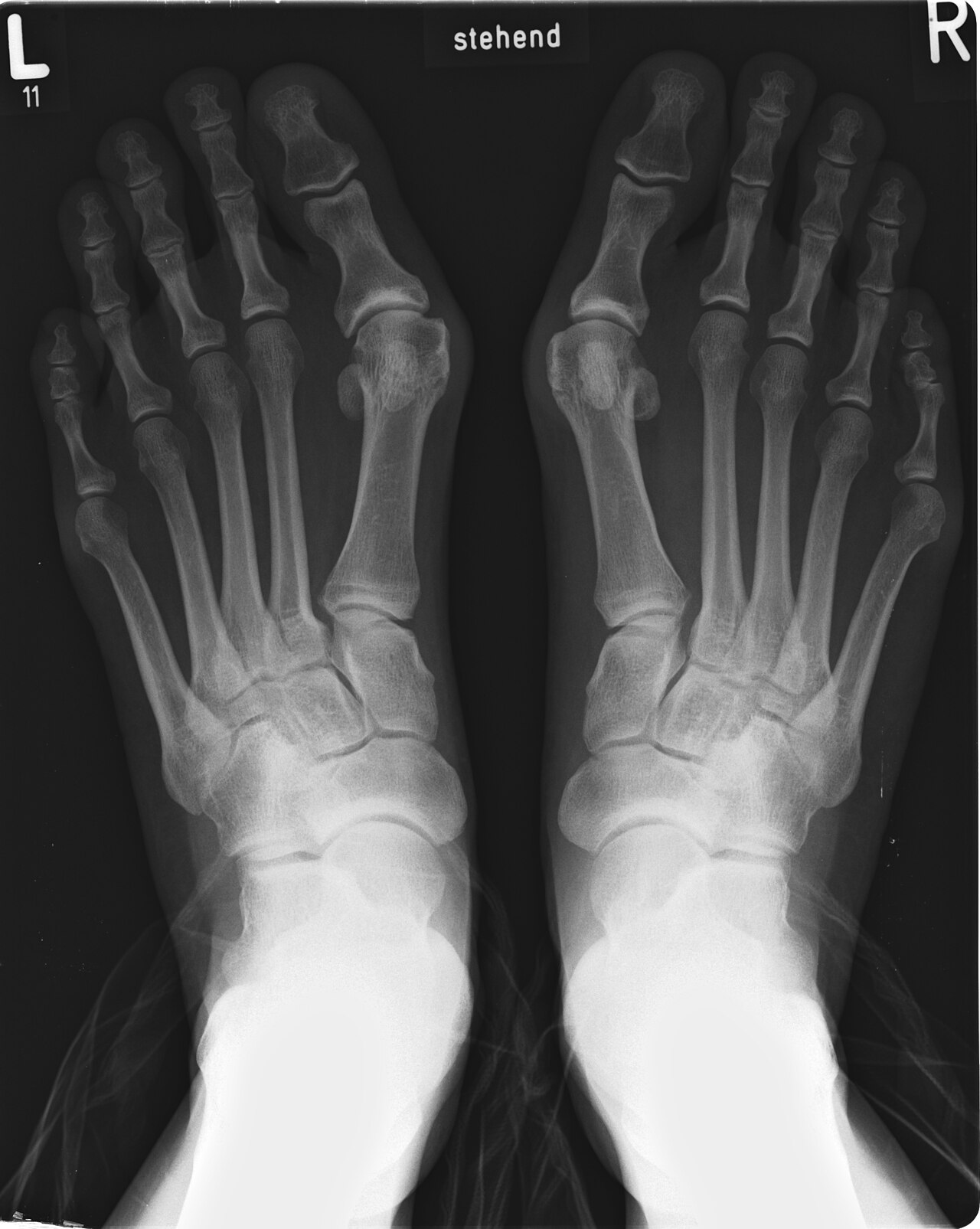
A bunion or hallux valgus is a bony lump that appears at the bottom of the big toe, causing the toe to bend inwards. This lump is created by the effect of the metatarsal bone, the protruding bone, rubbing against the shoe. Its Latin name, hallux valgus, derives from ‘hallux’ for ‘big toe’ and ‘valgus’ which translates as ‘pointing outwards’. Another variant, affecting the small toe, is known as the Tailor’s bunion.
Although tight or pointed shoes can aggravate a bunion, the underlying cause is usually the mechanics of the foot, which is why bunions often run in families and tend to enlarge slowly over time. As the big toe drifts, it crowds the lesser toes and the bump rubs in shoes — the common symptoms are pain over the prominence, difficulty finding comfortable footwear, and sometimes problems developing in the second toe.
For symptoms, roomier footwear, toe spacers and orthotics can all help and are a perfectly reasonable first step — but they manage the discomfort rather than reverse the deformity. When a bunion is genuinely painful or stopping you wearing normal shoes, surgery realigns the bone (an osteotomy), usually held with small screws, to bring the big toe back into position.
Modern bunion surgery, including minimally invasive techniques, is reliable and well tolerated, with most patients walking in a special shoe soon afterwards. The right approach depends on the size of the deformity and the state of the joint, which a weight-bearing X-ray will show.
A bunion isn’t a lump that needs sanding off — it is a misalignment of the whole first ray. The correction has to address that, not the bump.
Professor Heidari
Clinical approach
Weight-bearing x-rays measure the inter-metatarsal angle, the hallux valgus angle and the joint congruity. These numbers shape which operation is the right fit.
Keyhole (minimally-invasive) correction for mild-to-moderate deformities; open scarf or chevron for moderate-to-severe; Lapidus when the instability is in the midfoot, not the joint itself.
Walking in a flat post-op shoe from day one for many modern bunion procedures, normal trainers around 6 weeks, fitted shoes by 3 months. The plan is set out before you decide.
Treatments considered
Using toe-spacers or realignment splints to promote repositioning of the toes are among the non-surgical treatments available. Specially-designed shoes and padded insoles are other useful aids, together with anti-inflammatory painkillers, to be taken under your doctor’s direction.
Treating a Tailor’s bunion does not normally require surgery. Ensuring you are not wearing narrow shoes, the use of a toe spacer, the application of an ice pack, together with anti-inflammatory painkillers, as advised by your doctor, may allow the bones to realign without surgery.
Common questions
A consultation is a structured conversation, not a sales pitch. The diary holds while you decide.
Book a Consultation →Signed off on 26 August 2026