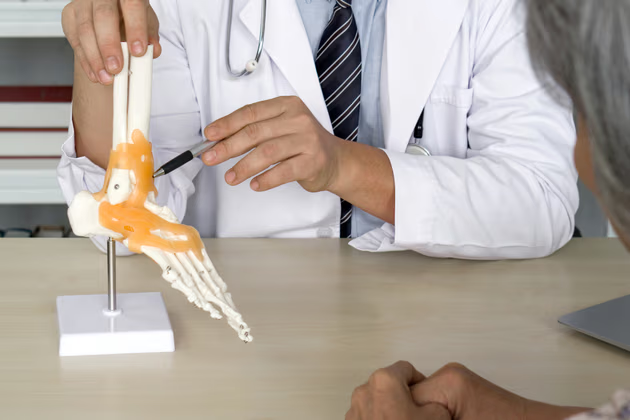
The conditions most patients first present with — pain in the ball of the foot, an aching arch, a stubborn corn, an irritated nerve. None of these need surgery in most cases, but all benefit from a proper diagnosis before someone tells you to live with it.
There are several common foot conditions including flat feet, ganglions and ingrown toenails. Whilst they can often be painful, if diagnosed early many can be treated non-surgically, returning patients to their normal way of life as quickly as possible.
Flat feet (fallen arches) are extremely common and frequently cause no trouble at all. In some people, however, the loss of the arch leads to aching and fatigue along the inside of the foot and ankle, often involving the posterior tibial tendon that supports the arch. The majority settle with supportive footwear, orthotics and targeted physiotherapy — surgery is reserved for the minority whose deformity is progressive or whose pain persists despite these measures.
Ganglions are benign, fluid-filled swellings that arise from a joint or tendon sheath, most often over the top of the foot or around the ankle. They are harmless, but can be uncomfortable in shoes or where they press on a nerve. Many resolve on their own or with simple measures; aspiration or, occasionally, a small excision is offered when a ganglion is genuinely painful or persistent.
An ingrown toenail develops when the edge of the nail grows into the surrounding skin, causing pain, redness and sometimes infection — most commonly in the big toe. Early cases respond to careful nail care, while recurrent or severe cases are reliably treated with a small in-clinic procedure that removes the offending nail border and stops it returning.
The common thread is that an accurate diagnosis comes first. Too many people are told simply to live with foot pain when a clear cause can be identified and addressed, very often without an operation. Where surgery is the right answer, it is planned around your activities and goals so you can return to the things that matter.