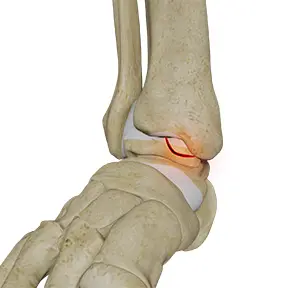





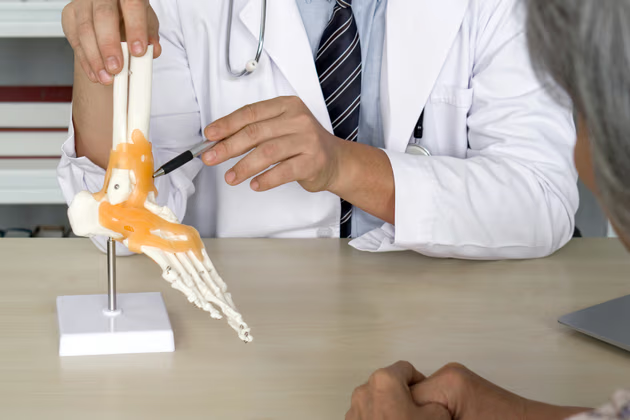
Calcaneal (heel-bone) fractures are among the most demanding fractures in foot and ankle surgery, particularly when the bone is comminuted — shattered into multiple small fragments. The heel takes the entire body weight at heel strike. Get the reconstruction wrong and the patient ends up with chronic pain, an altered gait, and a foot that won’t fit normal shoes.
The dilemma with open reconstruction
Big open reconstructions can deliver excellent anatomical restoration on the X-ray. The trouble is the heel skin: thin, with limited blood supply, prone to breaking down after large incisions. Wound complications and deep infection are common enough to make any senior foot-and-ankle surgeon cautious.
What we did
This 2022 paper, on which I was a co-author, describes our experience using a percutaneous (through-the-skin) screw fixation technique for comminuted calcaneal fractures. The principle: rather than opening the heel widely, we reduce the fracture as well as possible through small skin incisions and place screws across the subtalar joint to hold the corrected position. We treated 15 fractures in 14 patients, with an average follow-up of 17 months.
What we found
Eighty per cent of cases had anatomical angles restored to within acceptable limits — angle of Gissane, calcaneal length, calcaneal height — the parameters that matter for foot function. The mean AOFAS score, a composite functional outcome measure, was 74 (out of 100) — reasonable for this severity of injury. Wound complications were minimal: one wound breakdown (7%), and three patients (20%) had heel pain related to the screws and either lived with it or had the screws taken out later.
What this means for patients
If you have a comminuted heel-bone fracture, the conversation with your surgeon should include discussion of whether your case is suitable for percutaneous fixation. Not every fracture can be fixed this way — some need open reconstruction — but for the right pattern of injury and the right patient, the percutaneous approach offers good anatomy with substantially less wound risk.
Source: Malik C, Najefi AA, Patel A, Vris A, Malagelada F, Parker L, Heidari N, Jeyaseelan L. Percutaneous subtalar joint screw fixation of comminuted calcaneal fractures: a salvage procedure European Journal of Trauma and Emergency Surgery 2022;48(5):4043–4051. PMID: 35247058. Read the full paper on PubMed →