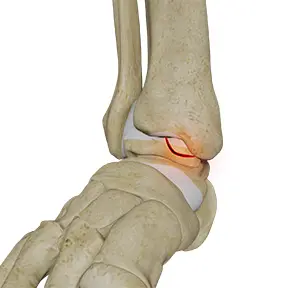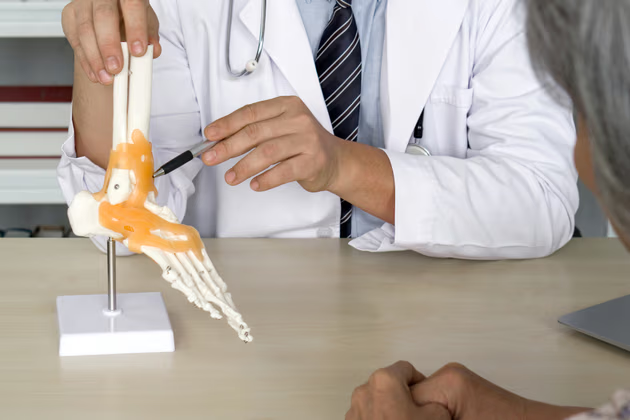





If you’ve worked in or around an A&E or trauma unit, you’ll know the “6-hour rule”: an open fracture — one where the broken bone has come through the skin — must be in theatre, irrigated and debrided, within 6 hours of injury. The rule is etched into emergency-department behaviour, into surgical-list scheduling, and into the trauma networks built around it.
Where the 6-hour rule came from
The rule has its roots in some early 20th century animal studies and observational case series suggesting that the longer bacteria sit in an open wound, the more they multiply, and the higher the eventual infection rate. It was a reasonable extrapolation. It has shaped a generation of trauma practice.
What we did
This 2021 systematic review and meta-analysis, on which I was third author, brought together every available study on the timing of debridement for open tibial fractures — the most common open fracture — pooling 10,032 cases across 20 studies.
What we found
Across all that data, there was no statistically significant association between the timing of debridement and either the infection rate (OR 0.87, 95% CI 0.68 to 1.11) or the non-union rate (OR 0.70, 95% CI 0.42 to 1.15). The 6-hour rule is not a fragile finding being challenged here; it is simply not supported by the pooled evidence as a hard cut-off.
This doesn’t mean we should abandon urgency in open-fracture care. What matters is the quality of the debridement — thorough washout, removal of devitalised tissue, careful inspection of the fracture site — rather than the exact clock time. A poor 4-hour debridement carries higher risk than a thorough 12-hour one.
What this means for patients
If you suffer an open tibial fracture and theatre access is not available within 6 hours because of operational pressures, the evidence does not say your risk is meaningfully higher. The team should make space for a thorough operation, not a rushed one. Speed alone isn’t the protective factor we once believed.
Source: Nicolaides M, Vris A, Heidari N, Bates P, Pafitanis G. The Effect of Delayed Surgical Debridement in the Management of Open Tibial Fractures: A Systematic Review and Meta-Analysis Diagnostics 2021;11(6):1017. PMID: 34199379. Read the full paper on PubMed →