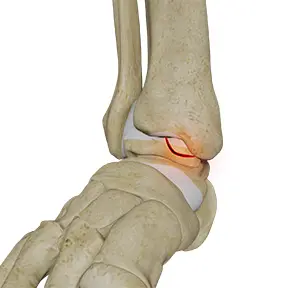






Pilon fractures sit at the top of any orthopaedic surgeon’s list of difficult injuries. They occur at the bottom of the tibia, where the shin bone meets the ankle, usually from a high-energy axial load — a fall from a height, a road traffic crash. The bone is shattered into multiple fragments. The cartilage of the joint is bruised. And the surrounding skin and soft tissue have usually taken the same impact as the bone.
The temptation, and the trap
The temptation, looking at the X-ray, is to fix the bone definitively as soon as possible — reduce the fragments, plate the tibia, restore the joint surface. The trap is the soft tissue. A pilon fracture often has a swollen, bruised, blistered skin envelope around it, and operating through that compromised tissue early often leads to wound breakdown, deep infection, and a much harder secondary problem to solve.
What we proposed
This 2021 paper, on which I was a co-author, proposes an orthoplastic dynamic soft-tissue classification for closed pilon fractures. The word “orthoplastic” signals the combined orthopaedic and plastic-surgery thinking. Dynamic means the classification is reassessed over the days after injury — the soft tissue changes as swelling settles and bruising matures.
The classification grades the soft tissue alongside the bone, guiding two practical decisions: when to operate definitively (now, in 7 days, in 14 days) and whether to involve plastic-surgery colleagues at the time of fixation in case soft-tissue cover is needed.
What this means for patients
If you sustain a pilon fracture, the conversation with your surgeon should not just be about the X-ray. It should include explicit discussion of the soft-tissue state, the timing of definitive surgery, and whether plastic-surgery colleagues will be involved. The era of rushing pilon fractures to theatre is, rightly, behind us.
Source: Citron I, Sadigh P, Iliadis AD, Bystrzonowski N, Wynell-Mayow W, Heidari N, Vris A, Pafitanis G. Towards an orthoplastic dynamic soft tissue classification for closed ankle pilon fractures Journal of Plastic, Reconstructive & Aesthetic Surgery 2021. PMID: 34176746. Read the full paper on PubMed →