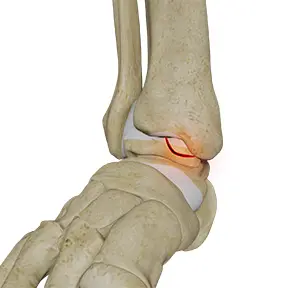





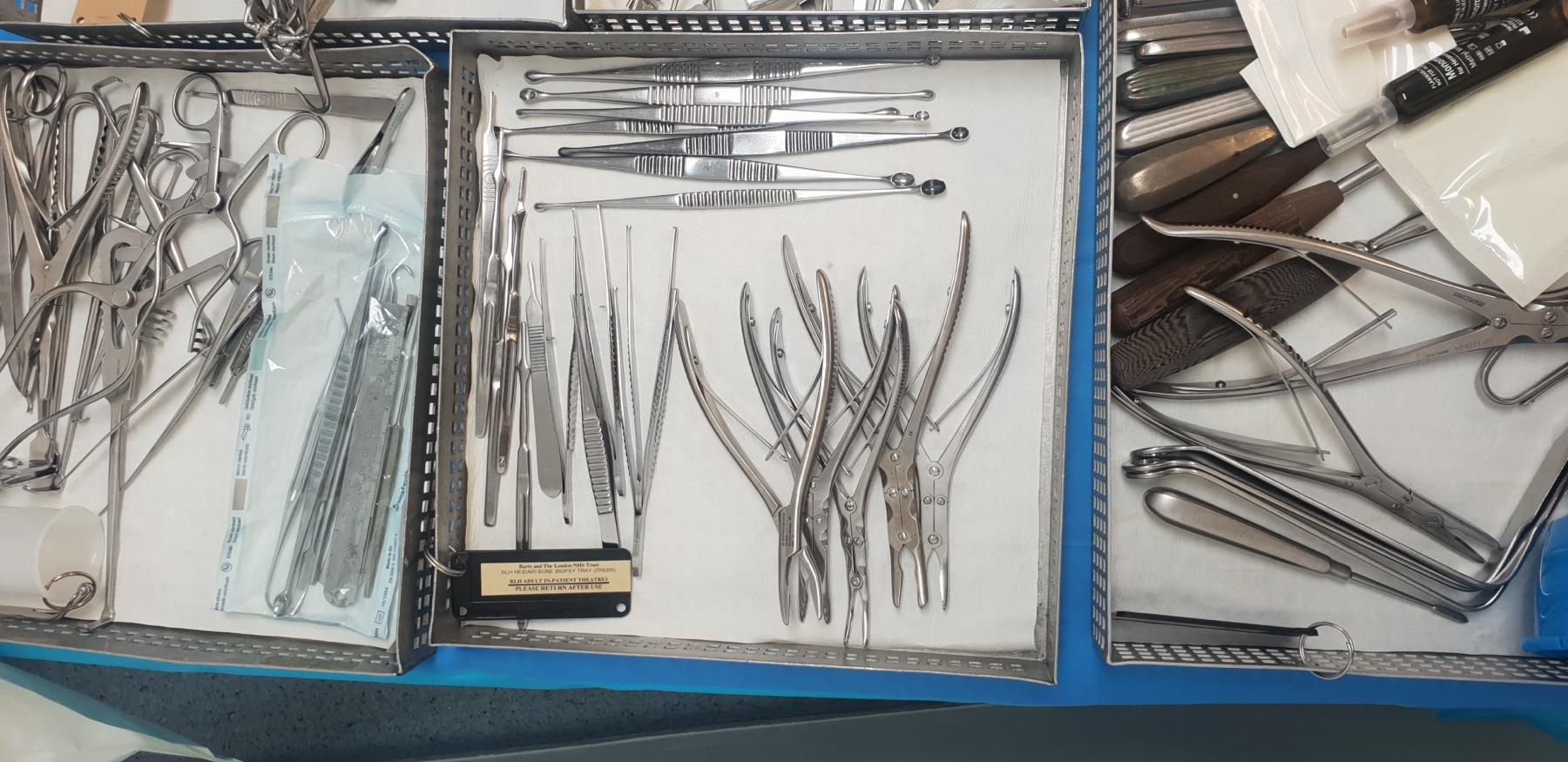
Almost every operation that fixes a broken bone involves drilling — to place screws, plates and pins. It looks like the most routine step in the procedure. But a drill bit does not stop politely at the far side of the bone: the instant it breaks through the second wall (the “far cortex”), it can lurch forward into whatever lies beyond — nerves, blood vessels and tendons that run close to the bone.
The “plunge”
Surgeons call that forward lurch the plunge, and it is exactly the kind of small, invisible risk that good surgical craft is built to control. The question this study asked was simple: in real hands, how far past the bone does the drill actually go?
What we did
At an AO surgical training course, 153 surgeons (41 women, 112 men) drilled through a simulated bone model while the true depth of penetration beyond the far cortex was measured. Professor Heidari co-authored the work.
What we found
Surgeons consistently over-drilled beyond the far cortex — the plunge was real, measurable and common, even among trained hands in a controlled setting. The paper’s blunt title says it best: drilling is not a benign procedure. The findings make the case for careful technique, drill guards and constant awareness of what sits on the other side of the bone.
What this means for patients
You will never see this part of your care, and that is the point. The reason complications from something as ordinary as a screw are rare is that surgeons study the unglamorous details — like how a drill behaves in the last millimetre — precisely so that the structures around your bones stay exactly where they should.
Source: Clement H, Heidari N, Grechenig W, Weinberg AM, Pichler W. Drilling, not a benign procedure: laboratory simulation of true drilling depth. Injury. Read the full paper →