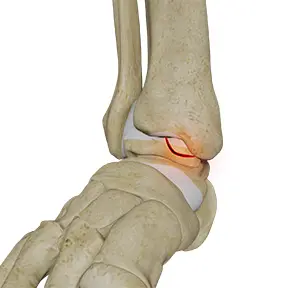





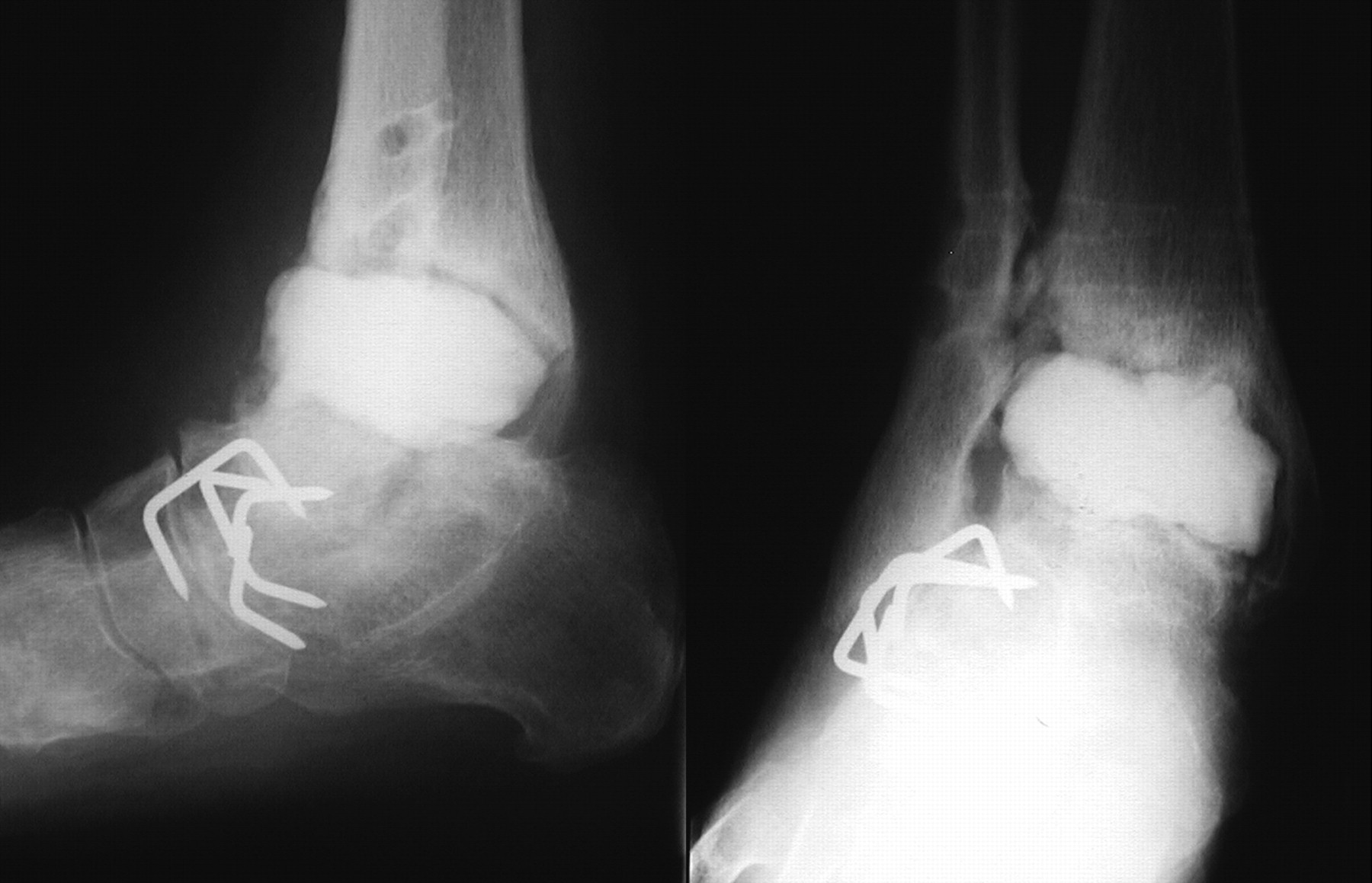
Ankle injections are a routine part of both diagnostic and therapeutic foot-and-ankle work. We use them to confirm whether a particular joint is the source of pain (a diagnostic block), to deliver anti-inflammatory medication, or to assess whether a joint will respond to a treatment before committing to surgery. All of which depends on the simple-sounding requirement that the injection actually goes into the joint.
Two standard approaches
There are two textbook approaches for putting a needle into the ankle joint. The anteromedial approach — from the inside-front, just medial to the tibialis anterior tendon. The anterolateral approach — from the outside-front, lateral to the extensor digitorum longus. Surgeons choose between them based on training, anatomy of the patient, and clinical preference.
What we did
This 2010 paper, on which I was first author and which is the oldest in our collection, was a controlled cadaver study using 76 ankles from 38 cadaver donors. We injected each ankle using either the anteromedial or anterolateral approach, then dissected to confirm whether the injectate had actually entered the joint or whether it had ended up in the surrounding soft tissues.
What we found
Anteromedial succeeded 31 out of 40 times (78%). Anterolateral 31 out of 36 (86%). The numbers favour the anterolateral approach but the difference doesn’t reach statistical significance. The overall accuracy across both approaches was 82%. Which means roughly one in five landmark-only injections miss the joint — even when performed by experienced operators on accessible cadaveric anatomy.
What this means for patients
If you’re going to have an ankle injection — particularly a diagnostic one where the result will guide a major treatment decision like surgery — the message of this study is to ask about image guidance. Ultrasound or fluoroscopic guidance brings accuracy to near 100%, and the additional cost in time and resources is small. For purely therapeutic injections in obvious anatomy, landmark technique is reasonable; for everything else, image guidance is worth it.
Source: Heidari N, Pichler W, Grechenig S, Grechenig W, Weinberg AM. Does the anteromedial or anterolateral approach alter the rate of joint puncture in injection of the ankle? A cadaver study Journal of Bone & Joint Surgery British 2010;92(1):176–8. PMID: 20044700. Read the full paper on PubMed →