





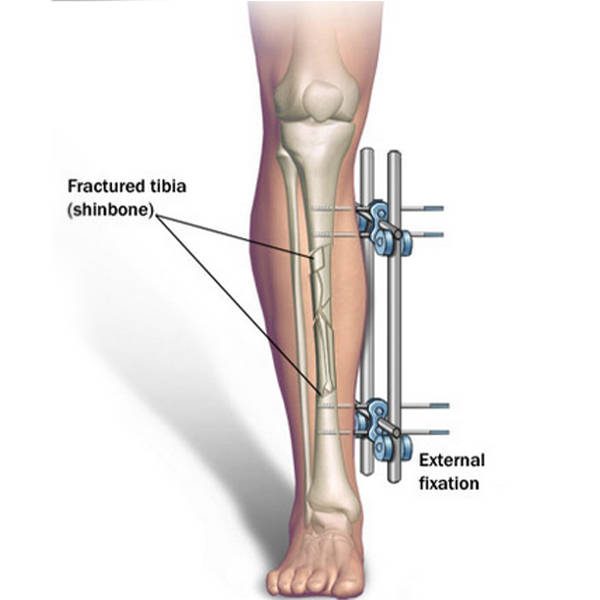
This is one of those papers that mostly matters to surgeons rather than patients — but it underpins the techniques described in the bigger thigh and shin deformity-correction papers, so it deserves its place here.
The problem
The Taylor Spatial Frame is the most widely used hexapod system for limb reconstruction. The standard workflow uses computer software: deformity is measured on imaging, parameters entered into the laptop, the software prints out a daily strut-adjustment schedule that the patient follows over weeks at home. It works very well outside theatre.
Inside theatre, the workflow is different. The surgeon needs to manipulate the frame in real time, while the patient is anaesthetised, with X-ray confirmation of position. Wrestling with a software application at the same time is cumbersome.
What I did
This 2013 paper, on which I was first author, describes a manual technique — a structured way of working out the strut adjustments needed for a desired correction, from first principles, without needing the computer. It puts the maths in the surgeon’s hand at the operating table.
Why it matters
The technique made it possible to use the Taylor Spatial Frame as an intra-operative tool: bring it onto the patient, dial in the correction at the table, fix the corrected position with internal metalwork, take the frame off. That sequence is the basis of the CHAOS technique described in our later papers on the femur and tibia. Without a way of operating the frame at the table without the computer, modern in-theatre hexapod surgery wouldn’t exist in the form it does today.
What this means for patients
You’ll never see this technique directly, but if you’ve been offered an in-theatre frame correction with same-day internal fixation, this paper is part of how that operation became possible.
Source: Heidari N, Hughes A, Atkins RM. Intra-operative correction of Taylor Spatial Frame without a computer Journal of Orthopaedic Trauma 2013;27(2):e42–4. PMID: 22648041. Read the full paper on PubMed →