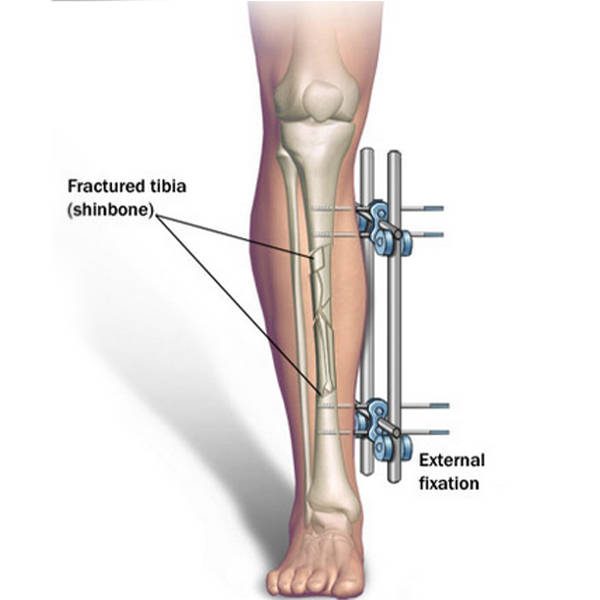






This is one of the more technical papers in our portfolio, and most of it sits in surgical territory rather than patient territory. But it has practical implications for anyone going through foot reconstruction with a circular external fixator, so it deserves its place here.
The detail that matters
Frame surgery around the foot — whether for complex fracture, deformity correction, or salvage reconstruction — relies on a foot plate, the lowest ring of the frame that sits beneath or around the foot itself. Where exactly that plate sits in relation to the heel pad, the toes, and the bones of the midfoot is a detail with very real consequences. A foot plate that is millimetres off can press on heel skin, pull at toes when the patient stands, or rub on the lateral foot border during sleep.
What we described
This 2018 paper, on which I was third author, describes a structured method for placing the foot plate in fine-wire frame constructs. It addresses the practical questions: how far below the heel pad, how the toes are accommodated, where the wires enter, what the relationship to the midfoot is. It reads as a how-to for surgeons.
Why it matters for patients
If you are facing foot frame surgery, the part of the experience that affects daily life most is the interaction between the frame and your soft tissue — pin-site irritation, heel-pad pressure, sleep position. A well-positioned foot plate dramatically reduces that burden. You won’t see this paper directly, but the surgeon planning your frame should be drawing on guidance like this rather than improvising.
Source: King A, Ball N, Heidari N, Hughes A. Fine wire frame foot plate positioning Annals of the Royal College of Surgeons of England 2018. PMID: 29046087. Read the full paper on PubMed →