Foot & Ankle Arthritis / Osteoarthritis
The cartilage that lines a joint wears out over years — sometimes from age, sometimes after an injury, sometimes from inflammatory disease. Once the cartilage has gone, the joint is painful and stiff.
The cartilage that lines a joint wears out over years — sometimes from age, sometimes after an injury, sometimes from inflammatory disease. Once the cartilage has gone, the joint is painful and stiff.
Foot & Ankle · Professor Nima Heidari
The cartilage that lines a joint wears out over years — sometimes from age, sometimes after an injury, sometimes from inflammatory disease. Once the cartilage has gone, the joint is painful and stiff.
Arthritis occurs when the cartilage encasing the bones, which aids fluent movement in the joint, is damaged, resulting in friction. Any joint in the body can be affected by arthritis. Osteoarthritis, rheumatoid arthritis, big toe arthritis (hallux rigidus), midfoot arthritis and hindfoot arthritis are just some of the varieties of arthritis affecting the foot and ankle.
In the foot and ankle, arthritis most often affects the ankle joint itself, the big toe (hallux rigidus), the midfoot and the hindfoot. It can follow an old injury — post-traumatic arthritis is the commonest cause in the ankle — or arise from osteoarthritis or an inflammatory condition such as rheumatoid disease. The result is pain on movement, stiffness, swelling and, in time, difficulty with everyday walking.
A great deal can be done before surgery is considered: supportive footwear, orthotics and bracing, anti-inflammatory measures and image-guided injections can hold a joint comfortable for years. When these no longer control the pain, the two surgical options are to fuse the joint or, for selected joints, to replace it.
Fusion and replacement are both excellent in the right hands and the right patient, and the choice between them factors in your age, demands, alignment and bone quality. The aim throughout is to relieve the pain and keep you walking comfortably for the long term.
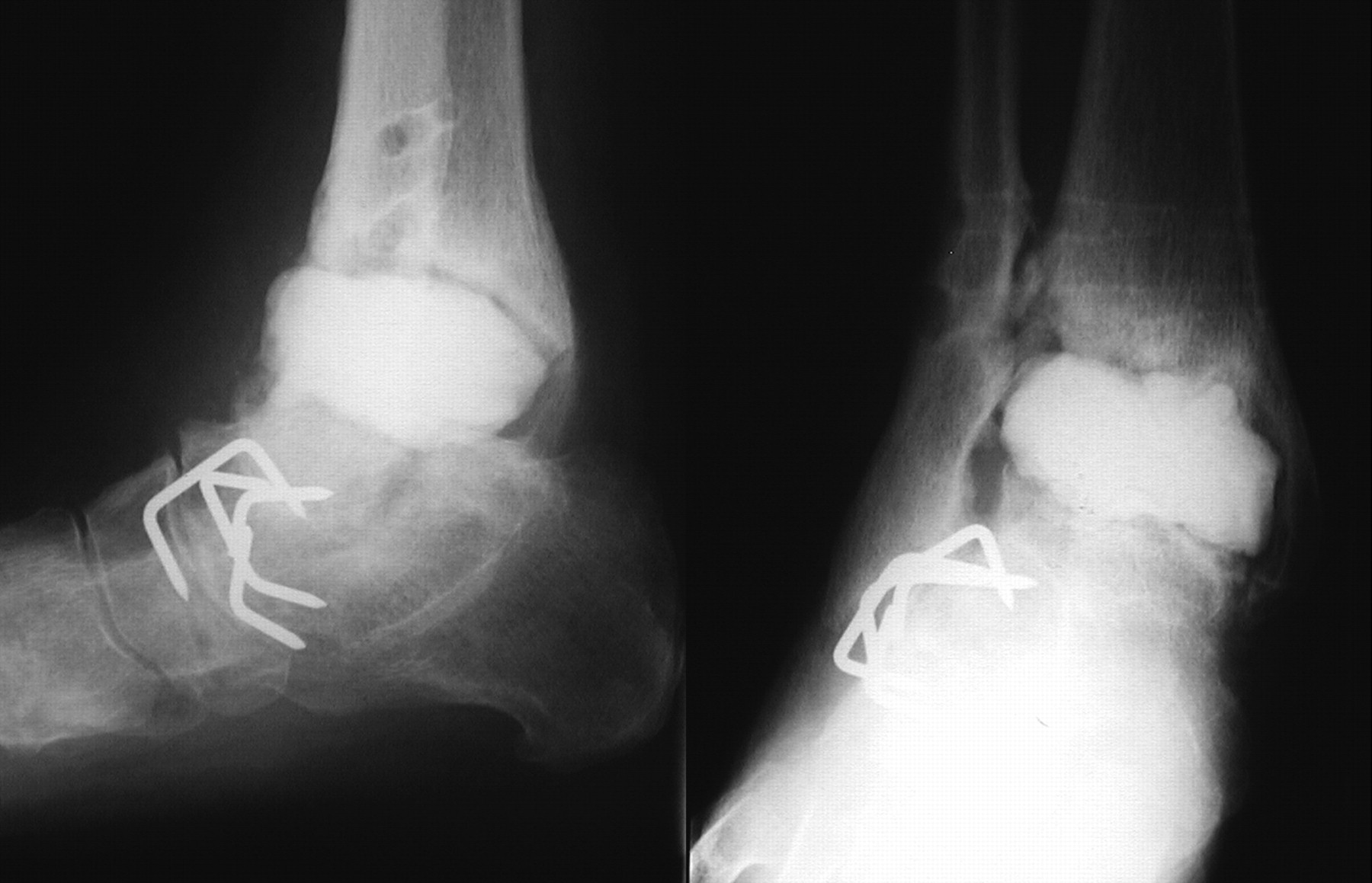
Fusion or replacement is one of the most considered conversations in foot and ankle surgery — and the right answer is rarely the same for two patients.
Professor Heidari
Clinical approach
Weight-bearing x-rays and, when needed, a CT or MRI map how much cartilage is left and which joints are involved. Treatment is matched to stage, not to label.
Footwear modification, bracing, anti-inflammatories, intra-articular injection. These can hold a joint comfortably for years before any decision about surgery becomes necessary.
The decision factors in your age, demands, alignment, bone quality and the joints around it. Both operations are excellent in the right hands and the right patient. The conversation is the work.
Treatments considered
If, despite non-surgical intervention, the ankle pain is having a negative impact on your day-to-day activities, your consultant may opt to perform an arthroscopy (keyhole surgery) to repair any joint damage. Usually, regardless of how severe the arthritis is, the objective will be the preservation of your ankle joint.
Early intervention is best because it gives the joint the best chance of preservation, whereas treatment at a later stage may mean big toe fusion surgery is necessary.
Common questions
A consultation is a structured conversation, not a sales pitch. The diary holds while you decide.
Book a Consultation →Signed off on 26 August 2026