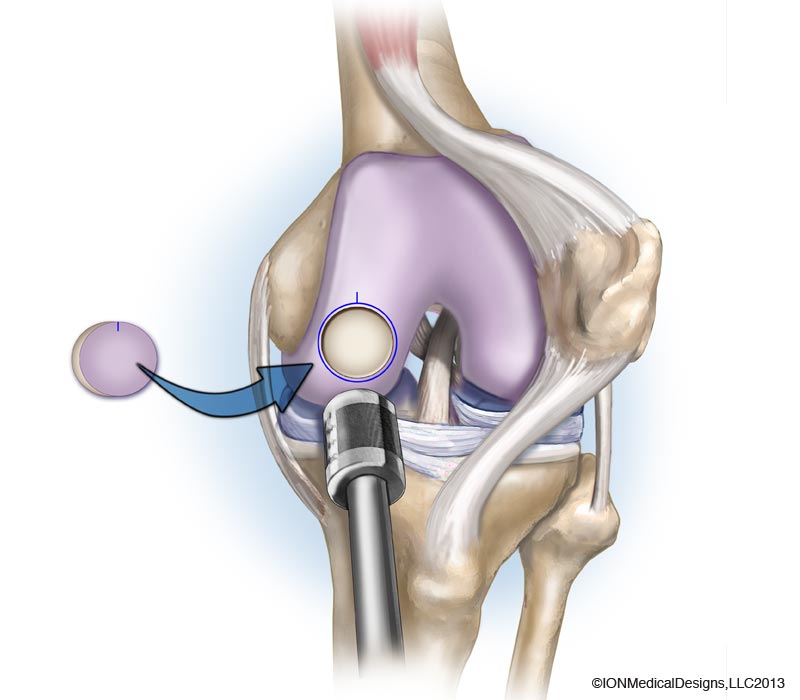





Knee osteoarthritis sits at one of the more frustrating points in orthopaedics. The patient has too much pain to ignore, but not enough damage to justify a knee replacement. Standard treatments — weight management, physiotherapy, anti-inflammatories, intra-articular cortisone — help, but for many patients the relief is partial and temporary.
What MFAT is
Micro-fragmented adipose tissue (MFAT) is a regenerative-medicine intervention. A small volume of the patient’s own fat is harvested under local anaesthetic, gently processed (fragmented into smaller cell clusters without adding chemicals or growth factors), and re-injected into the affected knee. The fat tissue carries cells — including pericytes and mesenchymal-stromal-like cells — that have anti-inflammatory and tissue-modulating effects. The principle is that the joint environment becomes less inflamed and the cartilage matrix is supported.
What we did
This 2025 paper, on which I was second author, looked at the long-term outcomes — out to three years — of MFAT for knee osteoarthritis in 335 patients. We measured the standard pain, function, and quality-of-life scores: VAS, Oxford Knee Score, WOMAC, and KOOS. We followed patients at multiple intervals to characterise both the trajectory of response and whether early improvements held.
What we found
All four outcome scores improved significantly at 3 months, with the improvement sustained at 3 years (p < 0.001 for all). That sustained signal at 3 years is the headline. Many regenerative-medicine interventions show strong early benefit that fades. MFAT, in this cohort, didn’t fade.
The other striking finding: the response at 3 months was a reliable predictor of long-term benefit. Patients who responded well early continued to respond well. Patients who didn’t respond at 3 months were unlikely to develop a benefit later. That has direct clinical utility — we can tell patients at 3 months whether to invest expectations in this treatment continuing to help.
What this means for patients
If you have knee osteoarthritis short of replacement and you’ve exhausted standard treatments, MFAT is a real option with proper long-term evidence. The procedure is a single outpatient day. If you respond at 3 months, the data say the benefit will likely be there at 3 years. If you don’t respond by 3 months, it’s reasonable to consider next steps rather than keep waiting.
Source: Stanciu N, Heidari N, Slevin M, et al. Predicting Long-Term Benefits of Micro-Fragmented Adipose Tissue Therapy in Knee Osteoarthritis: Three-Year Follow-Up on Pain Relief and Mobility Journal of Clinical Medicine 2025. PMID: 40648923. Read the full paper on PubMed →